
A Complete Guide to Sizes, Types, and Running Costs
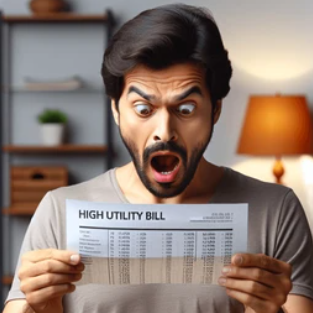
Air conditioners are one of the biggest electricity consumers in homes and businesses—especially during hot South African summers. Whether you’re installing a small bedroom unit or a large ducted system, understanding air conditioner electricity usage is key to managing your electricity bill.
OG Electrical has written this guide to help you break down:
- Average power usage by aircon size (BTU)
- Differences between inverter and non-inverter units
- Comparison of midwall split, cassette, and ducted systems
This will help you learn how much electricity air conditioners use in South Africa. Compare inverter vs non-inverter units, BTU sizes, and monthly running costs to save on your energy bill.
1. What Determines Air Conditioner Power Usage?
Air conditioner electricity consumption depends on:
- Cooling capacity (BTU) – Bigger units use more power
- Type of system – Split, cassette, or ducted
- Technology – Inverter vs non-inverter
- Usage time – Hours per day
- Room insulation & climate
By learning about air conditioner electricity usage, you can implement strategies to reduce your overall energy costs.
👉 As a rule of thumb:
Higher BTU = higher electricity usage
2. Average Power Consumption by Aircon Size
Below is a practical estimate of typical running power (kW) for common sizes:
| Aircon Size | Typical Cooling Capacity | Avg Power (Non-Inverter) | Avg Power (Inverter) |
| 9000 BTU | Small bedroom | 0.8 – 1.0 kW | 0.5 – 0.8 kW |
| 12000 BTU | Medium room | 1.0 – 1.4 kW | 0.7 – 1.1 kW |
| 18000 BTU | Large room | 1.5 – 2.0 kW | 1.0 – 1.6 kW |
| 24000 BTU | Open-plan area | 2.0 – 2.8 kW | 1.4 – 2.2 kW |
| 30000 BTU | Small office | 2.5 – 3.5 kW | 1.8 – 2.8 kW |
| 36000 BTU | Large office/home | 3.5 – 5.0 kW | 2.5 – 4.0 kW |
Example:
How much electricity does a 12000 BTU aircon use in South Africa?
If a 12000 BTU aircon runs 8 hours/day:
- Non-inverter → ± 10 kWh/day
- Inverter → ± 6–8 kWh/day
3. Inverter vs Non-Inverter: Electricity Usage
Non-Inverter (Fixed Speed)
- Compressor runs full power or off
- Uses more electricity due to constant restarting
- Higher spikes in power consumption
👉 These units can use 30–50% more electricity than inverter models
Inverter Air Conditioners
- Compressor adjusts speed based on demand
- Maintains constant temperature
- Uses only the energy required
👉 Inverter units are significantly more energy-efficient and reduce long-term costs
Key Insight:
- Non-inverter = cheaper to buy
- Inverter = cheaper to run
4. Power Consumption by Aircon Type
1. Midwall Split Units (Most Common)
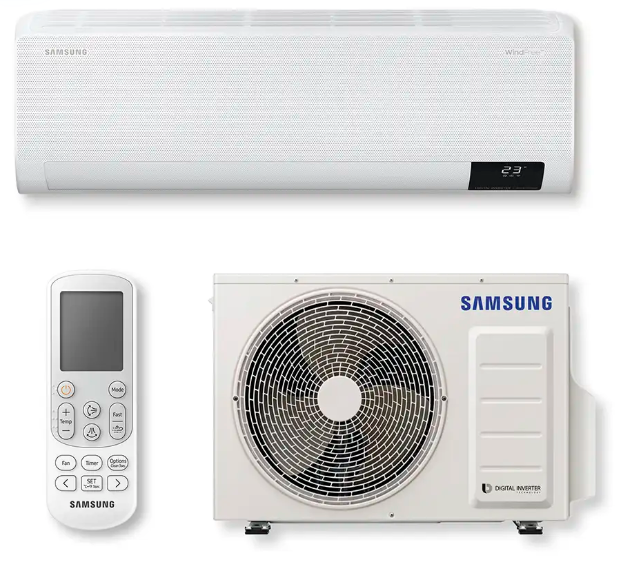
- Found in homes and small offices
- Available in all sizes (9000–36000 BTU)
Power usage:
- Most efficient option (especially inverter models)
- Best for individual rooms
👉 Ideal for:
- Bedrooms
- Living rooms
- Small offices
2. Cassette Air Conditioners (Ceiling Units)
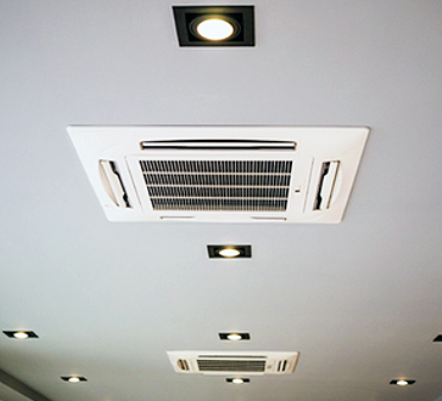
- Installed in ceilings (commercial spaces)
- Typically 18000–60000 BTU
Power usage:
- Higher than wall units due to airflow and size
- Good efficiency when cooling large open areas
👉 Ideal for:
- Shops
- Offices
- Restaurants
3. Ducted / Hideaway Systems
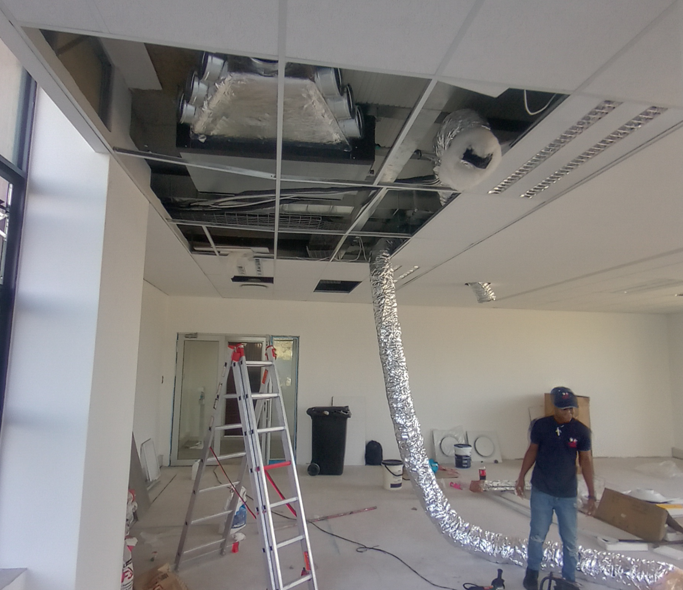
- Central system supplying multiple rooms
- Usually 24000 BTU and above
Power usage:
- Highest electricity consumption overall
- Can run 5 kW to 15 kW+ depending on size
👉 Ideal for:
- Large homes
- Offices
- Hotels
⚠️ Important:
While powerful, ducted systems can significantly increase your electricity bill if not properly zoned.
5. Real Monthly Cost Example (South Africa)
Assuming electricity at ± R2.50 per kWh:
| Aircon Size | Daily Use | Monthly Cost (Non-Inverter) | Monthly Cost (Inverter) |
| 9000 BTU | 6 hrs/day | ± R350 – R450 | ± R250 – R350 |
| 12000 BTU | 8 hrs/day | ± R700 – R900 | ± R500 – R700 |
| 24000 BTU | 8 hrs/day | ± R1,200 – R1,800 | ± R900 – R1,300 |
| 36000 BTU | 10 hrs/day | ± R2,500 – R3,500 | ± R1,800 – R2,800 |
6. How to Reduce Aircon Electricity Usage
Here are practical tips to cut costs:
✔ Use inverter air conditioners
✔ Set temperature to 22–24°C (not 18°C)
✔ Keep doors/windows closed
✔ Install proper insulation
✔ Service units regularly
✔ Use timers or smart controls
Final Thoughts
Air conditioners are essential for comfort—but they can significantly impact your electricity bill if not chosen correctly.
Key Takeaways:
- Inverter units save 30–50% electricity
- Bigger BTU = higher running cost
- Split units are most efficient for homes
- Ducted systems are powerful but expensive to run
👉 The best choice depends on:
- Room size
- Usage hours
- Budget (upfront vs long-term savings)
Need Help Choosing an Energy-Efficient Air Conditioner?
- OG Electrical Services provides professional air conditioning installation, maintenance, and energy-saving solutions in Johannesburg and surrounding areas.
OG Electrical Services is a Domestic and Commercial Electrical services company that specialises in Appliance Installation, Maintenance and Repairs, including general electrical repair work. We install, fix and service all brands and types of electrical appliances.
Contact us today for consultation and a proposal on the perfect size system and brand that will meet your needs and is tailored to your unique situation and budget.
The number to call is +27 73 378 6966 and email info@ogelectrical.co.za
Read more about our Air-conditioning solutions on the following link https://www.ogelectrical.co.za/airconditioners/